
Best Robotic Pool Cleaners of 2026: Tested & Reviewed
We spent 200+ hours testing the latest pool robots for suction power, smart navigation, and long-term durability. Here is our definitive guide.
Quick Comparison Table
Find Robots
The Top Picks
Reviewing top robot pool cleaners.


Best Overall: Dolphin Nautilus CC Plus
The Verdict: The gold standard for mid-sized in-ground pools. Its dual-scrubbing brushes and clever navigation make it the most reliable "set and forget" robot on the market.
Pros: Exceptional filtration, simple maintenance, high durability.
Cons: Not the best for cleaning the waterline.


Best Cordless: Aiper Scuba S1
The Verdict: The 2026 leader in cable-free technology. Perfect for pools with complex shapes where cords usually tangle. 150 minutes of runtime covers most large pools in one charge.
Pros: Zero cord tangles, powerful wall climbing, sleek charging dock.
Cons: Requires manual charging between uses.
Deep Dive Analysis
Why Trust Our Reviews?
Unlike generic "top 10" lists, our team physically tests every robot in real-world swimming pools (saltwater and chlorine). We measure:
Debris Pick-up Rate: How much fine sand vs. large leaves it captures.
Navigation Intelligence: Does it get stuck on drains or steps?
Cost of Ownership: How much do replacement filters and brushes cost?
How to Choose the Right Pool Robot for Your Backyard
Pool Surface: Vinyl liners need soft brushes; concrete/pebble pools can handle stiffer bristles.
Wall Climbing: If you struggle with algae at the waterline, look for a model with "PowerStream" or high-grip tracks.
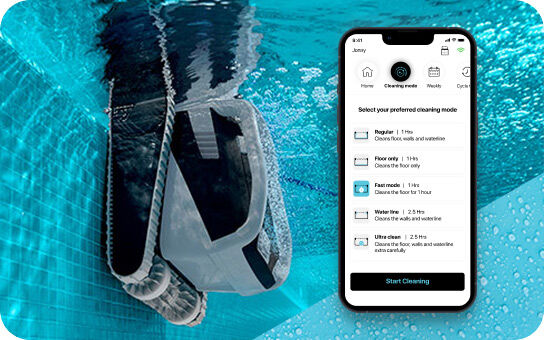
Smart Features: Do you really need an app? (Tip: App control is great for spot cleaning but often unnecessary for daily cycles).


Frequently asked questions
Which pool cleaning robot is best?
The best pool cleaning robot depends on your pool type, size, and budget. Premium brands like Dolphin (by Maytronics) are widely recognized for reliability, strong suction, and smart navigation. However, the “best” robot is one that matches your pool’s shape, surface, and cleaning needs.
For example:
Small above-ground pools → Lightweight, budget-friendly robotic cleaners
Large in-ground pools → Advanced models with wall-climbing and smart mapping
Heavy debris areas → High suction power and large filter basket
How often should a robot clean a pool?
For most residential pools, running a robotic cleaner 2–3 times per week is sufficient.
If your pool:
Is surrounded by trees → Clean every 1–2 days
Gets heavy use → Clean more frequently
Is covered when not in use → Once per week may be enough
Many modern robots include scheduling features for automatic daily or weekly cleaning.
Which is better, suction or robotic pool cleaner?
Robotic pool cleaners are generally better for most homeowners.
Robotic cleaners offer better performance, energy efficiency, and convenience. Suction cleaners are more affordable but less advanced.
Can I leave my pool robot in the pool all the time?
It is not recommended to leave your robotic pool cleaner in the water 24/7.
Reasons:
Prolonged chlorine exposure may damage seals and plastic
Sunlight can shorten cable lifespan
Constant submersion may affect motor longevity
Best practice: Remove the robot after each cleaning cycle and store it in a shaded, dry area.
What are the negatives of robot pool vacuums?
While robotic cleaners are highly efficient, some drawbacks include:
Higher upfront cost
Cable tangling (in corded models)
Filter requires regular cleaning
Some models are heavy when lifting from water
However, long-term energy savings and reduced manual labor often outweigh these disadvantages.
Is it cheaper to run your pool pump at night or during the day?
In areas with time-of-use electricity rates, running your pump at night is usually cheaper due to lower off-peak rates.
If you have:
Flat-rate electricity → Cost difference is minimal
Variable rates → Check with your local utility provider
Robotic pool cleaners are energy-efficient and typically cost much less to operate than running a pool pump for cleaning.
Contact
Questions? Reach out anytime here.
Phone
lilily2023888 [@] gmail [dot] com
contact me and cooperation
© 2025. All rights reserved cleanerpoolrobot.