Corded vs Cordless Pool Cleaners: A Comprehensive 2026 Guide for Pool Owners
This guide provides an objective analysis of current pool maintenance technology to help you determine which system offers the best return on investment for your outdoor living space.
7/5/20266 min read
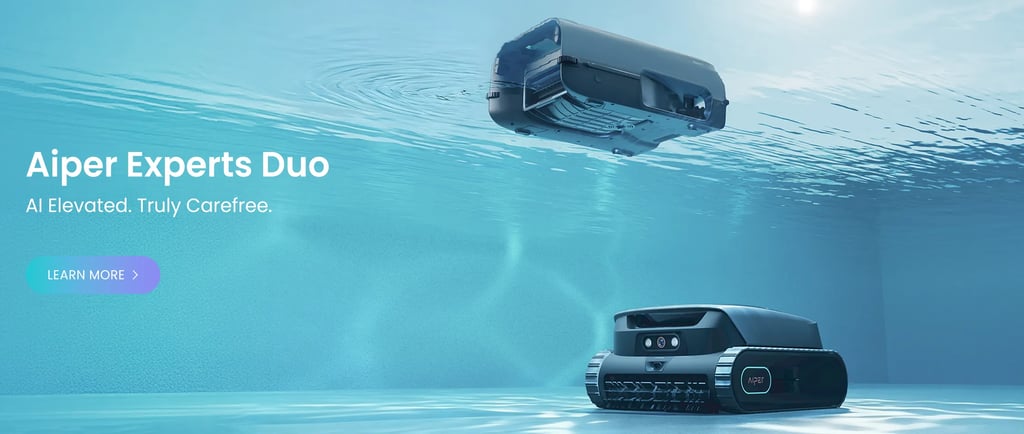
The landscape of residential pool maintenance technology has undergone a significant transformation. As of 2026, the industry has moved beyond simple filtration toward fully autonomous ecosystems. For pool owners, the central debate no longer centers on whether to automate, but rather on the power delivery system: corded vs cordless pool cleaners.
While early robotic models were often hampered by limited battery life or cumbersome cables, modern advancements in smart navigation AI and high-density energy storage have narrowed the performance gap. Choosing between a tethered unit and a battery-powered alternative now requires a nuanced understanding of suction power, filtration system efficiency, and the specific architecture of your pool. This guide provides an objective analysis of current pool maintenance technology to help you determine which system offers the best return on investment for your outdoor living space.
Key Takeaways
Market Dominance: Cordless robotic pool cleaners now account for over 65% of new residential sales due to significant improvements in lithium-ion battery life.
Power Consistency: Corded models remain the gold standard for ultra-large estates and pools with heavy debris loads, offering uninterrupted suction power.
Navigation Standards: In 2026, both categories utilize ultrasonic sensors and 5G connectivity, though cordless models often feature more advanced automatic docking capabilities.
Filtration Levels: Both systems now support micron filtration, capable of capturing particles as small as 2 microns, including algae spores and fine silt.
Longevity: Corded units typically offer a longer total service life, as they avoid the inevitable chemical degradation associated with high-capacity battery packs.
The Evolution of Pool Cleaning Technology
The journey of pool maintenance technology from manual vacuuming to autonomous robotics reflects a broader trend toward smart home integration. A decade ago, robotic pool vacuum technology was a luxury defined by simple "bounce" navigation patterns. By 2026, the standard has shifted toward precision.
According to 2026 professional reviews from outlets like CNET and PCMag, the integration of 5G connectivity and Matter-protocol support has turned the pool cleaner into a data-gathering node in the smart home. Modern units no longer move randomly; they utilize smart navigation AI to map the pool floor, walls, and waterline with millimeter precision. This evolution has paved the way for cordless models to compete directly with corded counterparts, as more efficient pathing reduces the energy required to clean a standard in-ground pool.
Corded Pool Cleaners: The Reliable Workhorse
Despite the surge in battery-powered technology, corded pool cleaners remain a staple for high-demand environments. The primary advantage of a tethered system is its "limitless" nature. Because these units draw power directly from a ground fault circuit interrupter (GFCI) outlet, they can operate for 24 hours or more without interruption.
Uninterrupted Suction Power and Scrubbing
Corded models are designed for deep cleaning. They often feature dual or triple-motor configurations that provide consistent suction power regardless of how full the debris canister capacity becomes. This makes them ideal for pools located near deciduous trees or in regions prone to sandstorms. Furthermore, the constant power supply allows for aggressive pool floor scrubbing and sustained waterline cleaning, where the robot must fight gravity for extended periods.
Tangle-Free Engineering
The most common historical complaint regarding corded models was the "cable bird’s nest." However, 2026 models have largely solved this with advanced mechanical swivels and tangle-free cable designs. these cables utilize internal sensors to detect tension and rotate the cord in real-time, preventing the loops that previously limited a robot's range in complex in-ground pool shapes.
Cordless Robotic Pool Cleaners: The Modern Revolution
The rise of cordless robotic pool cleaners represents the most significant shift in the industry over the last five years. These battery powered pool cleaners have eliminated the most significant pain point for pool owners: the restrictive power cord.
Breakthroughs in Battery Life and Charging
In 2026, high-density lithium-ion battery life has reached a threshold where a single charge can provide 4 to 5 hours of continuous cleaning. This is sufficient to cover even large residential pools multiple times. Furthermore, the introduction of solid-state battery options in premium models has increased safety and reduced the weight of the units, making them easier to retrieve from the water.
Smart Navigation and Automatic Docking
Without a cord to act as a tether, cordless robots rely heavily on smart navigation AI. These units use ultrasonic sensors to detect the pool’s boundaries and obstacles. A critical feature in the 2026 market is automatic docking. When the battery level drops below 15%, the cleaner automatically navigates to a designated "pick-up" point near the pool wall or returns to the surface for easy retrieval with a hook. This ensures the robot never dies in the middle of a deep-end floor.
Direct Comparison: Corded vs. Cordless Performance
To provide a clear robotic pool vacuum comparison 2026, it is essential to look at the technical specifications that impact daily use.
| Feature | Corded Robotic Cleaners | Cordless Robotic Cleaners |
| :--- | :--- | :--- |
| Power Source | Constant AC (via Swivel Cable) | Lithium-Ion / Solid-State Battery |
| Max Run Time | Unlimited | 4–6 Hours |
| Suction Consistency | 100% Constant | May dip at <5% battery |
| Wall Climbing | Excellent (Continuous Power) | Very Good (AI-Optimized) |
| Filtration Capacity | Large (Up to 5L canisters) | Medium (Typically 3L–4L) |
| Smart Integration | 5G / Wi-Fi / Matter | 5G / Bluetooth / App Control |
| Average Charge Time | N/A | 1.5–3 Hours (Fast Charging) |
| Portability | Lower (due to power box/cord) | High (no external tether) |
Filtration and Scrubbing Capability
While both types offer micron filtration, corded models often have a slight edge in debris canister capacity. If you are dealing with large volumes of leaves, the corded unit’s larger physical footprint often allows for more storage. Conversely, cordless models excel in "spot cleaning" and agility, navigating tight corners or complex tanning ledges that might snag a cable.
Reality Check: Disadvantages & Limitations
An objective corded vs cordless pool cleaners analysis must address the drawbacks of each technology. Based on professional industry data, neither system is without compromise.
The Trade-offs of Corded Models
Physical Obstruction: Even with tangle-free technology, a cable stretching across a pool deck can be a tripping hazard.
Distance Limitations: The cleaning radius is strictly limited by the length of the cord, which can be an issue for extra-long lap pools or unique architectural water features.
Energy Efficiency: While powerful, corded units often consume more total kilowatt-hours compared to the highly optimized, AI-driven paths of modern cordless units.
The Trade-offs of Cordless Models
Battery Degradation: Like all battery-powered devices, lithium-ion cells have a finite number of charge cycles. Owners should expect a 20-30% reduction in capacity after 3 to 4 years of heavy use.
The Charging Routine: A cordless robot requires a commitment to a charging schedule. If you forget to plug it in after a cycle, the pool remains uncleaned the following day.
Upfront Cost: High-capacity, waterproof battery systems are expensive. A top-tier cordless model in 2026 typically costs 15-20% more than a corded model with equivalent scrubbing power.
Which One is Right for Your Pool? (Decision Factors)
Choosing the right technology depends on your specific environment and lifestyle.
Pool Size and Type: For a standard above-ground pool or a medium-sized in-ground pool, a cordless model offers unparalleled convenience. However, for "mega-pools" exceeding 50 feet in length, a corded model ensures the job is finished without a mid-cycle recharge.
Debris Profile: If your pool is surrounded by pine trees or heavy foliage, the continuous suction power and larger canister of a corded unit are preferable. For dust, pollen, and light debris, cordless is more than sufficient.
Smart Home Goals: If you use a centralized hub (such as Matter-enabled systems), look for 2026 models that offer remote app control. This allows you to monitor battery health or schedule cleanings from your smartphone, regardless of the power source.
Waterline Cleaning Needs: If your pool accumulates a "ring" of oils and minerals at the waterline, ensure the model you choose (corded or cordless) has dedicated waterline cleaning modes and high-torque motors.
Conclusion: Investing in Your Pool's Future
The robotic pool vacuum comparison 2026 shows that the gap between corded and cordless technology is narrower than ever. For the average pool owner, the freedom and ease of use offered by cordless robotic pool cleaners make them the most attractive option for daily maintenance. The ability to drop a robot into the water without wrestling with a power cord has redefined the user experience.
However, the corded pool cleaner remains an essential tool for those who prioritize unfailing power and high-volume debris management. While it may lack the sleek, cable-free aesthetic of its counterparts, its reliability in large-scale applications is unmatched. Ultimately, both technologies serve the same vital purpose: maintaining a healthy, crystal-clear swimming environment through the application of advanced autonomous engineering. By evaluating your pool's specific dimensions and your own tolerance for manual charging cycles, you can select a cleaning partner that will keep your water pristine for years to come.
Contact
Questions? Reach out anytime here.
Phone
lilily2023888 [@] gmail [dot] com
contact me and cooperation
© 2025. All rights reserved cleanerpoolrobot.