Ultimate Guide to the Best Cordless Robotic Pool Cleaners of 2026: iGarden KN Series & Beyond
7/4/20265 min read
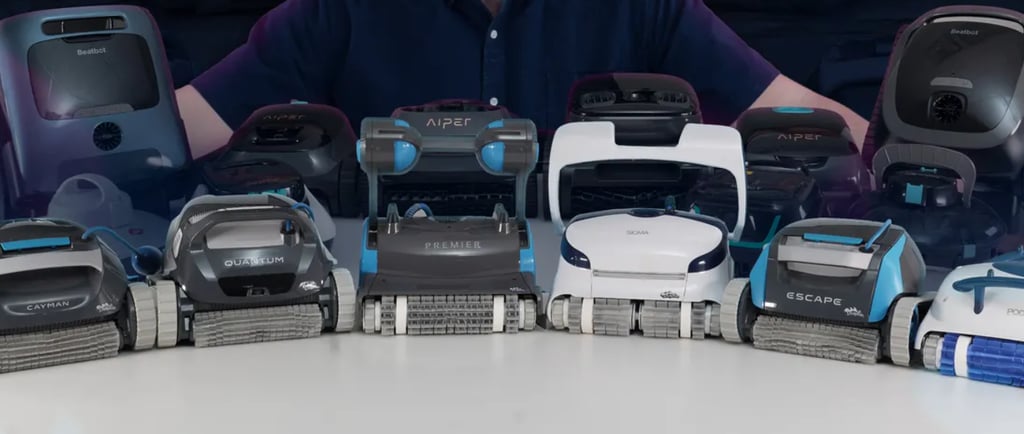
The landscape of residential pool care has undergone a radical transformation. In 2026, the tethered, cumbersome vacuum systems of the past have been largely phased out, replaced by a new generation of autonomous technology. The rise of the cordless robotic pool cleaner represents more than just a convenience; it is a shift toward a fully integrated, intelligent pool maintenance system. By eliminating the physical constraints of power cords, these modern robots offer unparalleled coverage and efficiency. Leading this charge is the iGarden KN series, a lineup that has become synonymous with high-performance cleaning and sophisticated AI integration. For the modern homeowner, these devices ensure that the pool remains a sanctuary of relaxation rather than a source of labor.
Key Takeaways
Battery Evolution: 2026 models feature high-density lithium-ion batteries providing up to 5-6 hours of continuous runtime.
Intelligent Navigation: Advanced sensors and smart navigation algorithms have replaced random-path cleaning with precision mapping.
Vertical Performance: Top-tier models now prioritize waterline scrubbing and wall climbing as standard features.
Suction Metrics: High-performance units maintain suction power exceeding 4500 GPH (Gallons Per Hour) for deep-cleaning efficiency.
Simplified Recovery: Self-parking technology and quick-drain systems ensure the robot is easy to retrieve and empty.
Cutting-Edge Features of the 2026 Smart Pool Cleaner
The 2026 market for the cordless robotic pool cleaner is defined by three pillars: power, intelligence, and autonomy. At the heart of these machines is an advanced lithium-ion battery life that has finally bridged the gap between "touch-up" cleaning and "deep-clean" cycles. Most flagship models can now service a standard 20' x 40' pool three times over on a single charge.
Innovation in the dual-drive motor has revolutionized how these units traverse surfaces. Unlike older models that struggled with slippery vinyl or rough pebble-tec, the 2026 generation utilizes independent motors to power both the treads and the high-speed brushes. This allows the robot to execute zero-radius turns and maintain a steady grip on the pool floor and walls.
Furthermore, the integration of a smart navigation algorithm and obstacle avoidance sensors ensures that the robot does not waste energy on redundant paths. According to 2026 professional reviews from industry leaders like CNET, these AI-driven systems reduce cleaning time by 35% compared to 2024 models. The inherent tangle-free design of a cordless system eliminates the risk of the robot getting stuck on its own cable, allowing it to navigate complex architectural features like swim-outs and sun shelves with ease.
Deep Dive: iGarden KN Series Capabilities
The iGarden KN series has positioned itself as a premium contender in the smart pool cleaner 2026 market by focusing on raw power and fine-tuned filtration. The series is particularly noted for its exceptional suction power (GPH), which rivals many corded commercial units.
Key technical specifications of the iGarden KN series include:
Heavy-Duty Scrubbing Brushes: Utilizing dual-active PVC brushes, the KN series effectively agitates stubborn algae and calcium deposits.
Fine Mesh Filter: The multi-layer debris filtration system is capable of trapping particles as small as 2 microns, ensuring that even fine silt and sand are removed.
Remote App Control: Through the iGarden Home app, users can toggle between "Floor Only," "Wall Only," or "Full Clean" modes. The app also provides real-time battery diagnostics and water temperature readings.
Energy-Efficient Cleaning: The KN series utilizes variable-speed suction, automatically increasing power when it detects heavy debris and scaling back during routine maintenance to preserve battery.
This combination of heavy-duty hardware and "smart" software allows the iGarden KN series to act as a comprehensive automatic pool vacuum, reducing the need for manual chemical adjustments by keeping the water physically cleaner.
Comparison: iGarden KN Series vs. 2026 Market Leaders
When selecting a high-end cordless robotic pool cleaner, it is essential to see how the iGarden KN series stacks up against other 2026 heavyweights, such as the latest iterations from Dolphin and Aiper.
| Feature | iGarden KN-5 Series | Dolphin Liberty 2026 | Aiper Seagull Pro II | | :--- | :--- | :--- | :--- | | Max Suction Power | 4800 GPH | 4200 GPH | 4500 GPH | | Runtime | 300 Minutes | 240 Minutes | 210 Minutes | | Waterline Scrubbing | Advanced (Dual Brush) | Standard | Standard | | Navigation Tech | iPath AI 4.0 | CleverClean+ | WavePath 3.0 | | Filter Capacity | 5.5 Liters | 4.0 Liters | 5.0 Liters | | Self-Parking | Yes (Near Wall) | Yes (Waterline) | Yes (Near Wall) |
The iGarden KN-5 series stands out in terms of raw runtime and filter volume, making it the preferred choice for larger residential pools or areas with heavy foliage. While the Dolphin series remains a leader in waterline parking (making it easier to grab without a hook), the KN series offers a more robust quick-drain system that sheds water weight in under 10 seconds, significantly easing the removal process.
The Reality Check: Disadvantages and Limitations
While the cordless robotic pool cleaner has reached a technological peak in 2026, potential buyers should maintain realistic expectations. According to technical assessments from PCMag, the primary drawback remains the "charge-to-work" ratio. Even with fast-charging technology, most high-end units require 2.5 to 4 hours to reach a full charge, meaning you cannot immediately restart a cycle if the first one missed a spot.
Furthermore, the sheer weight of these units is a factor. While the quick-drain system helps, a unit equipped with a heavy-duty debris filtration system and a large battery can still weigh between 18 and 25 lbs when dry. For users with limited mobility, lifting the robot out of the water remains a physical task.
Lastly, long-term battery health is a consideration. While lithium-ion technology has improved, these batteries generally have a lifespan of 3 to 5 years under heavy use. Replacing the integrated battery cells in an intelligent pool maintenance system can be a costly service, often representing 30-40% of the original unit's price.
2026 Buyer’s Guide: Selecting Your Automatic Pool Vacuum
Choosing the right wall climbing pool robot requires a look at your specific environment rather than just the spec sheet.
Pool Surface and Size: If you have a pebble-tec or tiled pool, prioritize models with high-grip tracks and dual-drive motors. For larger pools (over 50 feet), the GPH rating and battery life are the most critical metrics.
Waterline Scrubbing: Do not assume all "wall climbers" scrub the waterline. If you have a heavy "ring" of dirt around your tiles, ensure the model specifically mentions high-speed waterline scrubbing.
Filtration Needs: If your pool is under a canopy of trees, a fine mesh filter is a must. However, if your main issue is large leaves, look for a robot with a large intake port to avoid clogging.
The "Hook" vs. App Control: Some users prefer the simplicity of a retrieval hook, while others want the robot to drive itself to the surface via remote app control. Determine which level of "smart" integration fits your lifestyle.
Conclusion: Is the iGarden KN Series the Smart Choice?
In the competitive market of 2026, the iGarden KN series excels by balancing raw power with user-friendly smart features. While the upfront investment is higher than entry-level models, its superior suction power and extended battery life offer a tangible return in the form of a pristine pool and reduced manual labor. It remains a top-tier recommendation for those seeking a reliable, high-performance intelligent pool maintenance system.
Frequently Asked Questions (FAQ)
Q: How long do lithium-ion batteries last in pool robots? A: In 2026, most premium batteries are rated for 800 to 1,200 charge cycles. For the average user, this translates to roughly 4 to 6 years of operation before a significant drop in capacity is noticed.
Q: Can cordless cleaners handle large debris like acorns or twigs? A: Yes, provided the unit has a high-clearance intake. The iGarden KN series, for instance, is designed with a wide-mouth suction port specifically for larger debris, though the fine mesh filter may need more frequent cleaning during autumn.
Q: How does self-parking technology work? A: When the battery level drops below a certain threshold (usually 5-10%), the smart navigation algorithm directs the robot to the nearest wall. Some models will also climb to the waterline to be easily grabbed by the handle.
Q: Are app-controlled robots worth the premium? A: For most users, yes. The ability to schedule cleanings, receive "cycle complete" notifications, and manually steer the robot to a specific dirty spot provides a level of control that traditional "set and forget" models lack.
Contact
Questions? Reach out anytime here.
Phone
lilily2023888 [@] gmail [dot] com
contact me and cooperation
© 2025. All rights reserved cleanerpoolrobot.