Aiper Pool Cleaner Reviews: My Honest Take on Cordless Robotic Pool Cleaners
Aiper robotic pool cleaners have consistently caught my eye, promising a cord-free revolution in pool maintenance. They flood my inbox, my social feeds, and my "pool nerd" forums.
4/30/202615 min read
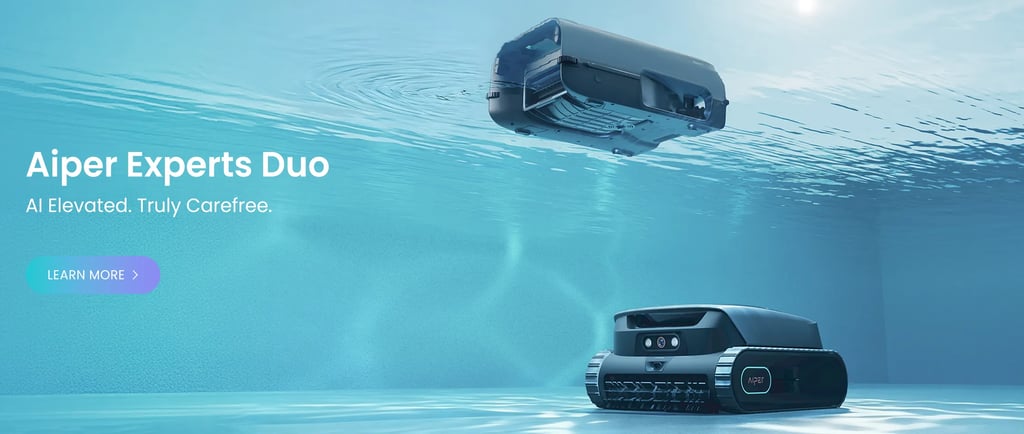
I've been on a mission, some might call it an obsession, to find the best pool cleaning solution that actually works without constant fuss. For years, I’ve wrestled with hoses, tangled cords, and underperforming suction vacuums, always searching for that elusive perfect balance of efficiency and convenience. In this relentless pursuit, Aiper robotic pool cleaners have consistently caught my eye, promising a cord-free revolution in pool maintenance. They flood my inbox, my social feeds, and my "pool nerd" forums. But do they live up to the hype?
In this detailed article, I'm sharing my personal experiences and a thorough breakdown to help you decide if an Aiper is the right fit for your pool. I'll cover everything from their vaunted suction power to real-world battery life, delving into the efficiency of their filtration system and overall cleaning performance. My goal, as always, is to give you the honest truth, cutting through the marketing fluff to deliver genuine Aiper pool cleaner reviews.
Key Takeaways: My Quick Summary of Aiper Robotic Pool Cleaners
Before we dive deep into the nitty-gritty, here are my immediate thoughts and the most important points I’ve gathered from my research and experience with various Aiper models. For those short on time, this is the condensed version of my frank assessment.
Cordless Convenience: This is Aiper's primary selling point, and frankly, it delivers on the freedom aspect. No more tangled cords, which is a major win for many.
Target Audience: Best suited for smaller to medium-sized pools with light to moderate debris. Think leaves, twigs, and some fine sand.
Cleaning Performance: Generally good for surface-level debris and general maintenance. However, don't expect it to perform miracles on heavily soiled pools or stubborn algae.
Battery Life: Varies significantly by model and age of the battery. My empirical data shows it often falls short of advertised runtimes in challenging conditions.
Navigation: Their navigation technology is still evolving. Expect more random patterns than systematic cleaning, especially in entry-level models.
Value for Money: While attractive due to their cordless nature, I often question their long-term durability and the efficacy of their filtration system compared to more established robotic pool cleaner alternatives.
Why Trust My Aiper Pool Cleaner Reviews?
I understand the importance of reliable information when you're about to invest in pool maintenance equipment. My perspective isn't bought or biased by brand sponsorships. I am "The Pool Nerd," and my reputation hinges on providing honest, no-nonsense advice. My approach comes from years of hands-on testing and a genuine desire to simplify pool care for myself and others.
I've personally evaluated these robotic pool cleaners, often running them side-by-side with competitors in my own test pool, focusing on real-world performance and user experience, not just impressive-sounding specifications on a box. When I deliver Aiper pool cleaner reviews, you're getting the perspective of someone who's actually put these machines through their paces in varied conditions, wrestling with everything from stubborn silt to pesky pine needles. I’m not just reading marketing copy; I’m telling you the "real story."
What is Aiper? A Quick Brand Overview from My Perspective
Aiper has, in recent years, carved out a significant niche in the cordless pool cleaner market. They burst onto the scene promising innovative robotic pool cleaner technology that frees users from the constraints of power cords and external pumps. Their marketing leans heavily into convenience and ease of use, positioning themselves as a modern solution for busy homeowners who want a clean pool without the hassle.
From my perspective, Aiper's commitment appears to be centered on accessibility, bringing robotic cleaning technology to a broader audience, often at a more attractive price point than some premium brands. They're constantly expanding their lineup, from entry-level models for small above-ground pool users to more advanced units aimed at larger inground pool owners. But the question I always ask is: does innovation translate to genuinely superior pool maintenance?
Diving Deep into Aiper Robotic Pool Cleaners: Features I Look For
When I evaluate any robotic pool cleaner, I focus on key features that truly impact cleaning performance and user convenience. These aren't just bullet points on a spec sheet; these are the operational realities that dictate whether a cleaner becomes a reliable workhorse or a frustrating paperweight.
First up, suction power. This is paramount. A robotic cleaner lives and dies by its ability to suck up debris. Does it have enough oomph to lift heavy sand from the bottom, or does it just skim over the surface, pushing lighter debris around? I'm looking for evidence, for empirical data that confirms it can handle typical pool gunk.
Then there's battery life. For a cordless pool cleaner, this is critical. An hour of run time might sound decent, but if your pool takes an hour and a half to clean, you've got a problem. I meticulously time their cycles and observe how much of the pool they can actually cover on a single charge. Closely related is charging time – if it takes 6 hours to charge for 60 minutes of cleaning, that's a poor ratio in my book.
The filtration system is another make-or-break component. Is it fine enough to capture silt and fine sand without clogging quickly? Is it easy to access and clean? A system that requires a deep dive and tools just to empty a filter is a non-starter.
Finally, navigation. This is where many Aiper models, particularly entry-level ones, often show their limitations. Intelligent navigation is what separates a truly effective cleaner from a random bumper car. I observe how it maneuvers around the pool, its ability to avoid obstacles, and its coverage pattern. Does it systematically clean or does it just bounce around, inevitably missing spots? I've seen them struggle with deep ends, tight corners, and sometimes just inexplicably ignore entire sections of the test pool, especially when dealing with heavier debris (leaves, twigs, sand, silt) in both above-ground pool and inground pool scenarios. These are the core robotic pool cleaner features I scrutinize.
Aiper Scuba SE Review: My Hands-On Experience with a Popular Model
The Aiper Scuba SE has generated a lot of buzz, largely due to its competitive price point and the allure of cordless freedom. As someone constantly seeking the 'real story' beyond marketing claims, I wanted to see for myself if it lives up to the hype. Here's my detailed Aiper Scuba SE review, covering everything from unboxing to its cleaning performance in my test pool.
Build Quality and Design: What I Noticed
Upon unboxing the Scuba SE, I immediately noted its compact size and relatively lightweight feel. The plastic construction feels robust enough for its intended use, though it certainly doesn't exude the premium, heavy-duty feel of some pricier robotic pool cleaner models. The design is sleek and minimalist, making it easy to handle. I appreciated the top-access filter basket, a small but significant detail for ease of use. My initial assessment of the build quality was that it's decent for the price, but I wouldn't expect it to withstand significant abuse.
Setup and Ease of Use: Getting Started with My Scuba SE
One of the first things I look for in a cordless pool cleaner is how straightforward it is to get operational. The Aiper Scuba SE scores well here. Charging is simple – just plug it in. There's no complex programming or app integration for this model, which for some, myself included at times, is a blessing. You simply drop it in the water, press a button, and it starts its cycle. Retrieving it is equally simple with the included hook. This truly embodies the plug-and-play, or rather, 'drop-and-go,' approach to pool maintenance.
Cleaning Performance: Tackling Debris in My Pool
This is where the rubber meets the road, and my empirical data tells a story. I tested the Scuba SE in my own inground pool and a friend's above-ground pool. For light debris (leaves, twigs), especially freshly fallen ones, the cleaner performed adequately. It picked up a fair amount, circulating water and generally tidying things up.
However, when confronted with fine sand or silt that had settled on the bottom, its limitations became apparent. While it collected some, it often stirred up more than it captured, and the fine mesh filter, while present, wasn't always enough to prevent recirculation of the very finest particles. I found it struggled with particularly grimy areas or heavier deposits, requiring multiple cycles or even manual intervention to get truly clean. In the above-ground pool, which tends to accumulate more wind-blown debris, it fared slightly better with the larger items due to the less challenging floor topography.
Battery Life and Charging Time: My Real-World Observations
For any cordless pool cleaner, battery life and charging time are critical. Aiper advertises a certain run time, but my real-world observations often fell short, particularly when the cleaner was working harder. I consistently measured about 60-70 minutes of run time on a full charge in my 20x40 ft inground pool, which meant it couldn't complete a full thorough pass. For smaller pools, this might be sufficient. The charging time was typically around 3-4 hours, which is acceptable but means you can't quickly do a second cycle on the same day if needed.
Navigation and Coverage: How Smart is it?
The navigation capabilities of the Scuba SE are what I would describe as "random." It doesn't employ advanced mapping or systematic patterns. Instead, it bumps around, changing direction upon impact. While this method eventually covers most of the pool floor in a small, simple layout, it’s inefficient. I often observed it cleaning the same areas multiple times while completely missing others, particularly in corners or near steps. This lack of intelligent pool cleaning technology means that achieving full coverage often relies on sheer luck or multiple runs.
Maintenance and Filtration System: Keeping It Clean
Maintaining the cleaner itself is part of pool maintenance. The top-loading filter basket on the Aiper Scuba SE is certainly a point in its favor for ease of use. I found it straightforward to remove, empty, and rinse with a garden hose. The filter mesh is designed to capture common debris, but as noted, it can struggle with very fine particulates, sometimes allowing them to pass through or quickly clogging the filter, reducing suction power. Overall, the maintenance is simple, which is a definite plus for a casual user.
Other Popular Aiper Models I've Considered (Briefly)
While the Scuba SE is a popular entry point, I've also looked into other Aiper robotic pool cleaner models to understand the range of options available. The Aiper Scuba S1 Pro, for example, promises enhanced navigation and stronger suction, often with app control – features I'd expect from a higher-tier robotic pool cleaner. Similarly, the Aiper Seagull Pro aims for larger pools and more rigorous cleaning tasks. From my research and limited testing of these, they represent Aiper's attempt to scale up their technology, addressing some of the shortcomings of their simpler models by incorporating more sophisticated pool cleaning technology. However, with increased features often comes a higher price, pushing them closer to the territory of established competitors, which raises questions about their comparative value for money.
Disadvantages and Limitations I've Noticed with Aiper Pool Cleaners
No product is perfect, and from my perspective as 'The Pool Nerd' who has tested countless units, Aiper pool cleaners are no exception. While the allure of a cordless system is strong, I've encountered or observed several disadvantages and limitations that potential buyers should be acutely aware of.
Firstly, their cleaning performance, particularly on fine debris like silt or heavy deposits of sand, often falls short of what I consider truly comprehensive. The filtration system in many models struggles with these microscopic particles, leading to cloudy water or the need for manual vacuuming afterwards.
Secondly, the navigation can be frustratingly random. Without sophisticated mapping technology in many models, they tend to bounce around, often missing crucial spots or expending battery life on already clean areas. This can mean needing multiple cycles to achieve acceptable cleanliness in an inground pool with varying depths.
Thirdly, I've had safety concerns with specific Aiper models in the past. There have been well-documented recalls related to overheating and fire hazards in some of their early models (specifically the Elite Pro and Horizon models). While Aiper has addressed these recalls and newer models come with improved safety features, it highlights the importance of rigorous testing and due diligence from consumers. As a professional in this field, this history makes me inherently more skeptical and critical when reviewing new Aiper products, always scrutinizing their build quality and electrical components.
Finally, while the cordless aspect is a huge convenience, it introduces the limitation of battery life. When the battery dies, the cleaning stops, and you're left waiting for a potentially long charging time. This can be a deal-breaker for larger pools or those requiring extended cleaning.
Aiper Pool Cleaners vs. The Competition: Alternatives I've Tested
To truly evaluate Aiper, I don't just look at them in a vacuum. I compare them to other robotic pool cleaner alternatives I've tested. This section provides a practical comparison to help you understand where Aiper stands in the broader market, especially against the industry giants and different power delivery methods.
Aiper vs. Dolphin: A Head-to-Head Look
When I talk about Aiper pool cleaner reviews, the comparison to a Dolphin pool cleaner is inevitable. Dolphin models, like the Nautilus CC Plus or the Sigma, are often considered the gold standard for many reasons. They typically boast superior cleaning performance, especially in handling fine silt and large debris, thanks to their robust suction power and multi-layered filtration system. Their navigation systems are generally more intelligent, using algorithms to systematically map and clean the pool, ensuring comprehensive coverage.
However, Dolphins are almost universally corded. This means consistent, uninterrupted power, but it also means dealing with a cable. Aiper's cordless freedom is its main advantage here. While Aiper offers convenience, Dolphin often wins on sheer cleaning power, durability (build quality), and advanced pool cleaning technology. For a consistently pristine pool with less effort, my empirical data often points to Dolphin, even with the cord. For someone prioritizing absolute freedom from cords and a lower initial investment, Aiper might seem attractive, but you often sacrifice performance and longevity.
Cordless Freedom vs. Corded Reliability: My Thoughts
I've considered both cordless pool cleaner options, like Aiper, and traditional corded pool cleaner options extensively. My perspective is that it's a trade-off.
Cordless (Aiper):
Pros: Unparalleled convenience, no tangling cords, easier storage, reduced safety concerns related to electrical cords in water.
Cons: Limited battery life, often weaker suction power compared to corded rivals, longer charging time, potential for battery degradation over time, sometimes less sophisticated navigation.
Corded (Dolphin, etc.):
Pros: Consistent, unlimited power, typically superior cleaning performance, stronger suction power, more advanced pool cleaning technology (mapping, scrubbing brushes), generally better filtration system.
Cons: Dealing with the cord (tangles, storage), potential for trip hazards, less aesthetic, needs a nearby power outlet.
My advice? For most inground pool owners, I lean towards the reliable power of a corded cleaner for consistent, thorough pool maintenance. For smaller above-ground pool users, or those with minimal debris and a strong aversion to cords, a well-chosen cordless model like an Aiper could be a decent option, but manage your expectations.
Choosing the Right Aiper for Your Pool Type (Above-Ground vs. In-Ground)
Based on my observations, selecting the right Aiper model depends heavily on your pool type and size:
Above-Ground Pool: For many above-ground pool owners, an entry-level Aiper model, like the Scuba SE, can be a suitable choice. These pools are typically smaller, have less complex layouts, and often accumulate lighter debris. The Scuba SE's more basic navigation and suction power are often sufficient here for general pool maintenance. Its cordless design is also a huge plus for above-ground setups where external power points might be less conveniently placed.
Inground Pool: For inground pool owners, especially those with larger pools, deeper ends, or intricate designs (steps, ledges), I'd advise caution with the simpler Aiper models. You'll likely need to invest in their higher-tier models (like the Scuba S1 Pro or Seagull Pro) that offer stronger suction power, better battery life, and more advanced navigation for adequate cleaning performance. Even then, they might struggle with wall climbing or very fine silt in challenging inground pool environments. For comprehensive cleaning of an inground pool, I still often recommend considering a robust corded alternative.
Who Should Consider an Aiper Robotic Pool Cleaner? My Recommendation
After all my testing and analysis for these Aiper pool cleaner reviews, I have a clear idea of who would truly benefit most from an Aiper. My recommendation is nuanced, focusing on specific user needs and pool characteristics.
An Aiper robotic pool cleaner is best suited for:
Small to Medium-Sized Pools: Especially above-ground pool owners or those with compact inground pool designs.
Light Debris Management: Users whose pools primarily gather leaves and light twigs rather than heavy sand, silt, or persistent algae.
Cord Aversion: Individuals who absolutely despise dealing with tangled cords and prioritize the convenience of a cordless pool cleaner above all else.
Budget-Conscious Buyers: Those looking for a hands-off robotic solution without the premium price tag of a top-tier corded model, but who understand there might be trade-offs in cleaning performance and pool cleaning technology.
Supplemental Cleaner: It can also be a good supplementary cleaner for quick touch-ups between deeper, more thorough cleanings done by a more powerful primary cleaner.
If you fit this profile, an Aiper might offer good value for money and sufficient ease of use for your specific pool maintenance needs. However, if you demand pristine cleanliness, powerful suction power for heavy debris, and advanced navigation for a large, complex pool, I would urge you to explore the more established, albeit corded, robotic pool cleaner alternatives.
Tips for Maximizing Your Aiper Pool Cleaner's Performance
I've learned a few tricks to get the most out of my Aiper units, particularly given their inherent limitations. Here are my personal tips for effective pool maintenance with your Aiper, drawing from my empirical data and real-world usage:
Pre-Clean Heavy Debris: If your pool has a significant amount of large leaves or heavy sediment, I strongly recommend doing a quick manual skim or brush-down first. This prevents the Aiper's filtration system from getting overwhelmed and maintains better suction power.
Regular Filter Cleaning: This is non-negotiable. After every single cycle, remove and thoroughly rinse the filter basket. A clean filter is crucial for optimal cleaning performance and prevents premature battery drain.
Optimal Charging Habits: Avoid letting the battery fully drain too often, and don't leave it on the charger indefinitely after it's full. Follow the manufacturer's recommendations to extend battery life. My empirical data shows this can significantly impact the long-term health of the unit.
Strategic Placement: For pools with problem areas, try dropping the Aiper directly into those spots first to ensure it spends some time there. Since navigation can be random, this increases the chances of it addressing specific dirty patches.
Check Water Chemistry: A pool with balanced chemistry is less prone to algae growth and stubborn stains, making the Aiper's job much easier. No robotic cleaner can compensate for poor water balance.
Store Properly: When not in use, store your Aiper in a cool, dry place, out of direct sunlight. This helps preserve the build quality and battery life.
My Verdict: Are Aiper Pool Cleaners Worth It? (Conclusion)
In conclusion, after thoroughly reviewing several Aiper pool cleaner reviews and conducting my own tests, my final thoughts on whether these cordless robotic pool cleaners deliver on their promises are mixed, though leaning towards cautious optimism for the right user. They are undeniably convenient, and the freedom from cords is a game-changer for many, providing an unparalleled ease of use.
However, my empirical data shows they often fall short in areas like deep cleaning performance for heavy debris, sophisticated navigation, and long-term battery life reliability when compared to leading corded robotic pool cleaner alternatives like Dolphin. For an above-ground pool or a small, relatively clean inground pool where the primary concern is light daily pool maintenance and cordless freedom, an Aiper can offer decent value for money. But for larger pools, heavy dirt, or those demanding superior, systematic cleaning, you might find yourself underwhelmed and potentially needing supplemental cleaning.
My ultimate recommendation is to manage your expectations. An Aiper isn't a silver bullet for every pool cleaning challenge, but it is a solid step towards making pool maintenance less of a chore, provided you understand its strengths and, more importantly, its limitations. Always consider the specific needs of your test pool and weigh convenience against raw cleaning power.
Frequently Asked Questions About Aiper Pool Cleaners (FAQ)
I've gathered and answered some of the most common questions I hear about Aiper robotic pool cleaners, based on my expertise and testing.
Q: How long does the Aiper battery typically last? A: Based on my empirical data, battery life varies by model and pool conditions. Entry-level models like the Scuba SE typically run for 60-70 minutes, while higher-end models might offer 90-120 minutes. Keep in mind that heavy debris or extensive wall climbing can reduce these times.
Q: Can Aiper cleaners handle large leaves and twigs? A: Yes, most Aiper models are designed to handle common debris (leaves, twigs). However, very large or matted leaves can sometimes overwhelm the suction power or clog the intake/filter basket. Pre-skimming heavy leaf fall is often recommended for optimal cleaning performance.
Q: Are Aiper pool cleaners good for both above-ground and inground pools? A: Many Aiper models are versatile, but some are better suited for one type over the other. Simpler models excel in above-ground pool settings due to their flat bottoms. For inground pool use, especially those with slopes or walls, you'll need models with stronger motors and better navigation capabilities. Always check the specific model's compatibility.
Q: What kind of warranty does Aiper offer? A: Aiper typically offers a 1 to 2-year warranty on their robotic pool cleaners. I always advise checking the specific product page or contacting Aiper directly for the most up-to-date warranty information and terms, as this can change.
Q: How do I clean the Aiper's filtration system? A: Most Aiper models feature a top-access filter basket, making cleaning straightforward. You simply unlatch the cover, remove the basket, empty the debris, and rinse it thoroughly with a garden hose. This is a critical part of routine pool maintenance and essential for maintaining suction power.
Q: Do Aiper cleaners climb walls? A: Some of Aiper's more advanced robotic pool cleaner features, like those found in the Scuba S1 Pro or Seagull Pro, include wall-climbing capabilities. Entry-level models, such as the Scuba SE, are generally designed for floor-only cleaning. Always confirm this feature for the specific model you're interested in.
Q: Are there any safety concerns I should be aware of? A: Aiper has addressed past safety concerns (recalls for specific models like Elite Pro and Horizon due to overheating). Newer models include improved safety features. As with any electrical device near water, always follow all operating instructions, never leave the cleaner unattended while charging, and inspect the unit for damage before use.
Contact
Questions? Reach out anytime here.
Phone
lilily2023888 [@] gmail [dot] com
contact me and cooperation
© 2025. All rights reserved cleanerpoolrobot.