Above Ground vs. Inground Pool Robots: Which One Do You Actually Need?
Understanding the nuances of above ground vs inground pool robots is essential for any homeowner looking to protect their investment while maximizing leisure time.
7/5/20266 min read
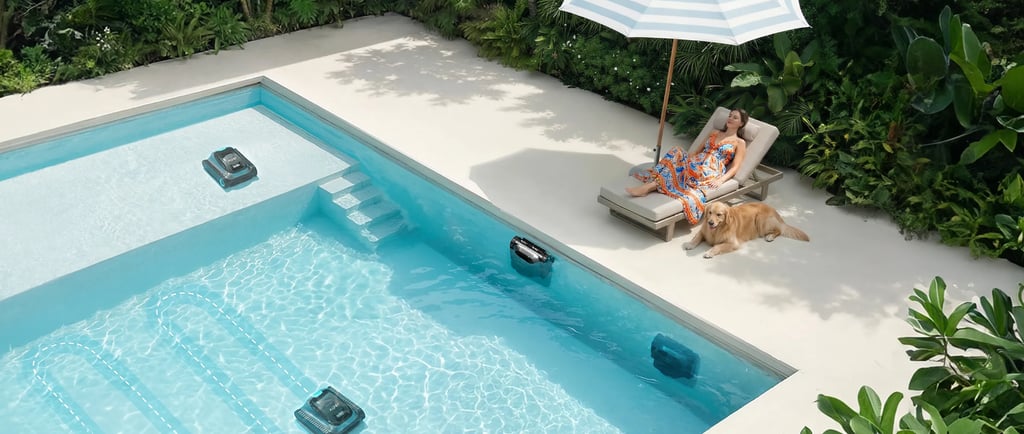
The landscape of pool maintenance has undergone a significant transformation over the last few years. As we move through 2026, the transition from tethered, cumbersome units to sophisticated autonomous systems is nearly complete. Today, pool maintenance automation is no longer just about suction; it is about AI-driven pathfinding, induction charging, and the widespread adoption of cordless technology.
While the core goal remains the same—removing debris and maintaining water clarity—the hardware required to achieve this varies significantly depending on your pool's construction. Understanding the nuances of above ground vs inground pool robots is essential for any homeowner looking to protect their investment while maximizing leisure time. Whether you are dealing with a delicate vinyl liner or a rugged pebble-tec finish, the 2026 market offers specialized solutions designed to handle specific structural challenges.
Key Takeaways
Design Intent: Inground robots are engineered for verticality, focusing on wall climbing ability and waterline scrubbing, whereas above-ground robots prioritize floor-only efficiency and lightweight maneuvering.
Surface Safety: Above-ground units emphasize pool liner protection with softer brushes and balanced weight distribution to prevent stretching or tearing of vinyl.
Filtration & Power: Inground models typically offer higher suction rates and advanced micron filtration to handle larger volumes of water and finer particulates like silt and algae.
2026 Innovation: Cordless pool cleaners 2026 standards now include induction charging docks and SLAM-based (Simultaneous Localization and Mapping) navigation algorithms as baseline features for mid-to-high-end models.
Why Your Pool Type Dictates Your Choice
Selecting a pool robot is not merely a matter of "more power is better." The primary constraint is pool robot surface compatibility. Inground pools are typically permanent structures made of concrete, plaster, tile, or fiberglass. They are built to withstand the weight of heavy machinery and the high-torque scrubbing required to remove organic stains from waterline tiles.
Conversely, above-ground pools are often temporary or semi-permanent structures with vinyl liners supported by a steel or aluminum frame. These pools lack the structural rigidity of their inground counterparts. Using a heavy inground robot in an above-ground pool can lead to structural stress or, more commonly, damage to the floor liner. Furthermore, the transition angles in above-ground pools—where the floor meets the wall—are often curved or "coved," which requires a specific hydrodynamic design to navigate without getting stuck or causing abrasions.
Above Ground Pool Robots: Lightweight and Efficient
The modern robotic pool cleaner for above ground pool environments is a masterclass in efficiency. Because most above-ground pools do not have the structural integrity to support a heavy robot climbing the walls to the surface, these units often feature a floor-only mode. This focus allows manufacturers to strip away unnecessary weight, resulting in a more agile machine that won't "sink" into the soft sand base often found under vinyl liners.
Key features in this category include:
Hydrodynamic Design: These robots are shaped to remain pinned to the floor using water flow rather than sheer weight, ensuring they don't tip over during rapid turns.
Debris Canister Access: Most 2026 models utilize top-loading filters, making it easy for the user to lift the unit out by its handle and spray out the fine-mesh basket.
All-Surface Brushes: Instead of aggressive PVC or stiff bristles, these robots use specialized brushes designed to be gentle on vinyl while still being effective at dislodging biofilm.
By focusing on the floor—where 90% of debris typically settles in above-ground pools—these robots offer a more cost-effective entry point into pool maintenance automation without sacrificing cleaning quality.
Inground Pool Robots: Power and Versatility
For owners of permanent installations, inground pool robot features focus on total coverage. An inground pool is a three-dimensional cleaning challenge involving deep ends, shallow sun shelves, and vertical walls.
The most critical capability of an inground robot is its wall climbing ability. High-torque motors and high-friction tracks allow these units to defy gravity, reaching the waterline where oils and scales often accumulate. To maintain a pristine look, these robots perform waterline scrubbing, utilizing active scrubbing brushes that spin at twice the speed of the robot’s movement to strip away the "bathtub ring" of organic matter.
Furthermore, these units are equipped with high-performance suction rates, often exceeding 4500 GPH (gallons per hour). This power is necessary to pull water through ultra-fine micron filtration systems that trap everything from large oak leaves to microscopic algae spores. In 2026, many of these units also incorporate obstacle detection sensors to navigate around ladders, built-in stairs, and drain covers without human intervention.
Comparison: Above Ground vs Inground Pool Robots
When conducting an automatic pool cleaner comparison, it is helpful to look at the technical specifications that differentiate the two categories.
| Feature | Above-Ground Robot | Inground Robot |
| :--- | :--- | :--- |
| Primary Cleaning Area | Floor (primarily) | Floor, Walls, & Waterline |
| Average Weight | 10–15 lbs | 18–25 lbs |
| Navigation | Basic Pathing / Randomized | SLAM / AI Mapping |
| Suction Rate | 2500–3500 GPH | 4000–5000+ GPH |
| Brush Type | Soft Rubber / Foam | Dual Active PVC / Stiff Bristle |
| Filtration | Standard Mesh (Debris) | Multi-Layer Micron (Silt/Algae) |
| Power Source | Cordless / Battery | Cordless / Induction / Hybrid |
The navigation algorithms used in 2026 models have become a major differentiator. While above-ground robots often use a systematic zig-zag pattern, inground robots utilize advanced sensors to map the pool's topography, ensuring they don't miss a single corner of the deep end.
The 2026 Standard: Cordless Technology and Smart Control
We have reached a point where cordless pool cleaners 2026 models are the preferred choice for most consumers. The elimination of the "swivel cord" has solved the most common failure point in robotic cleaners: cord tangling and dry-rot.
Modern cordless units now offer a battery runtime of up to 4 hours, which is sufficient to clean even Olympic-sized residential pools on a single charge. The move toward induction charging has also improved longevity; by removing external charging ports, manufacturers have eliminated the risk of pin corrosion from pool chemicals.
Smart app control has also become more intuitive. According to 2026 industry reviews from tech outlets like CNET and PCMag, the "One-Touch" deployment is now standard. Users can select "Floor Only," "Waterline Only," or "Full Clean" from their smartphones. Some premium models even include a "Pick-Up" mode, where the robot automatically drives to the wall and climbs to the surface when it senses the cleaning cycle is complete or the battery is low, making it easy for the owner to retrieve.
The Reality Check: Disadvantages & Limitations
No technology is without its drawbacks. When weighing above ground vs inground pool robots, one must consider the long-term trade-offs.
For above-ground robots, the main limitation is the lack of vertical cleaning. If your pool suffers from heavy algae growth on the walls, a floor-only robot will require you to manually brush the walls down to the floor first. Furthermore, their lightweight nature makes them less effective in pools with high-flow main drains, as the suction from the pool's pump can sometimes "trap" the small robot over the drain cover.
Inground robots, while powerful, are significantly more expensive and heavier. Lifting a 22 lb robot out of the water—plus the weight of the water trapped inside—can be a physical challenge for some users. Additionally, the complexity of their internal components (AI sensors, dual drive motors, and climbing treads) means that repairs can be costly once the warranty expires.
A universal concern for the 2026 generation of cleaners is battery degradation. While lithium-ion technology has improved, most cordless batteries will see a 20-30% reduction in total runtime after 3 to 5 years of heavy use. Unlike corded models, replacing these batteries often requires professional service to maintain the watertight seal.
Choosing the Right Fit: Surface Compatibility and Protection
The final decision should always prioritize pool liner protection. If you have a vinyl liner pool—whether it is above-ground or inground—ensure the robot is rated for vinyl. A robot designed for a rough plaster finish may have brushes that are too abrasive, leading to premature thinning of the liner material.
Conversely, if you have a large inground pool with significant leaf fall, do not attempt to save money by purchasing an above-ground model. The lower suction rate and smaller debris canister will result in the unit clogging quickly, requiring multiple manual emptyings per cleaning cycle. Match the suction rate and canister volume to your environment; a pool surrounded by pine trees requires a much more robust filtration system than an indoor or screened-in pool.
Conclusion: Maximizing Your Pool Maintenance Automation
The debate of above ground vs inground pool robots ultimately comes down to the right tool for the specific job. In 2026, the technology has matured to the point where there is a perfect match for every pool configuration.
If you own an above-ground pool, look for a lightweight, cordless model that offers superior liner protection and ease of handling. If you have an inground pool, invest in a unit with high-torque wall climbing and waterline scrubbing capabilities to ensure a truly hands-off maintenance experience. By choosing a robot that matches your pool’s structural needs and surface type, you ensure a cleaner pool, a longer-lasting liner, and more time to actually enjoy the water.
Contact
Questions? Reach out anytime here.
Phone
lilily2023888 [@] gmail [dot] com
contact me and cooperation
© 2025. All rights reserved cleanerpoolrobot.